The District Line: BARKING to UPMINSTER

BARKING TOWN


The content of this chapter has been inspired by the walks published by the L B of BARKING & DAGENHAM and BE FIRST (regeneration company owned by the Borough).

Simone Panayi, of Be Furst, writes: “Would you like to take a guided tour of Barking's historical sites and celebrated heritage? We have mapped an accessible route through Barking town centre which should be suitable for all ages. It is a circular tour starting and ending at Barking Station - itself a heritage feature - with its Booking Hall of 1961 nationally listed.
The new Town Trail has a main loop, via Abbey Green, which includes the heritage art trail funded by The National Lottery Heritage Fund. Each artwork has its own QR code linking to further information and images. To walk the main trail will take about 1 hour. There are optional extensions to the north, south, east and west of the town centre for those who want to explore more of Barking's heritage. These extensions can all be included in the main walk, extending the walk to 3-4 hours or be enjoyed as separate walks.
We are promoted the new trail with a series of heritage films during Spring 2023. Each film introduces a location from the Barking Heritage Trail and a heritage 'Easter egg' at that location - revealing a surprise feature from Barking's heritage.
A printable version of the trail is available as a PDF on this web page and is currently be trialled. Please contact Simone if you have any helpful comments.
Simone.panayi@befirst.london”


Regeneration

Conservation Area


Today it is difficult to imagine that Barking town centre once had a variety of grand houses, only two remain Fawley House and the Vicarage.
New homes are being build behind those hoardings


The walk starts here
RAILWAY and LU STATION

Barking Station is primarily listed for the bold, modern structure of the Booking Hall, which was built in 1959 to the designs of H.H. Powell, the chief architect of the Eastern Region of the British Railways Company.
Read the rest of IAN VISITS post…
THE SPOTTED DOG PH


Haunted!
LEFT Alongside STATION PARADE
a Public Artwork: THE CATCH

Catch?…Fishing, in Barking?. This artwork reflects, as well, about the Anglo-Saxon past…
b former EAST THAMES FOYER/MEDIA CENTRE
The FOYER was created to work with and engage with local young people, giving them accommodation. By architectural practice JESTICO & WHILES
d EQUINOX HOUSE

A residential addition to the TANNER ST redevelopment. JESTICO & WHILES
c LIGHT WAVES

A dynamic light installation: Pulses of coloured lights are triggered by passers-by. By artist RAPHAEL DADEN
e TANNER ST.: “COSTA DEL BARKING”


A redevelopment of 165 homes, flats and houses, by Architects PETER BARBER, “the miracle creator of dazzling streets”.
On the site of former tower blocks
Alongside NORTHERN. RELIEF ROAD to F and
I cannot believe my eyes: an EDWARD VIII pillar-box


Former THE JOLLY FISHERMAN PH

Keep reading the guide…Although difficult to believe, It makes sense such a name in BARKING
f NORTHBURY JUNIOR SCHOOL: VICTORIAN BUILDING and EXTENSION

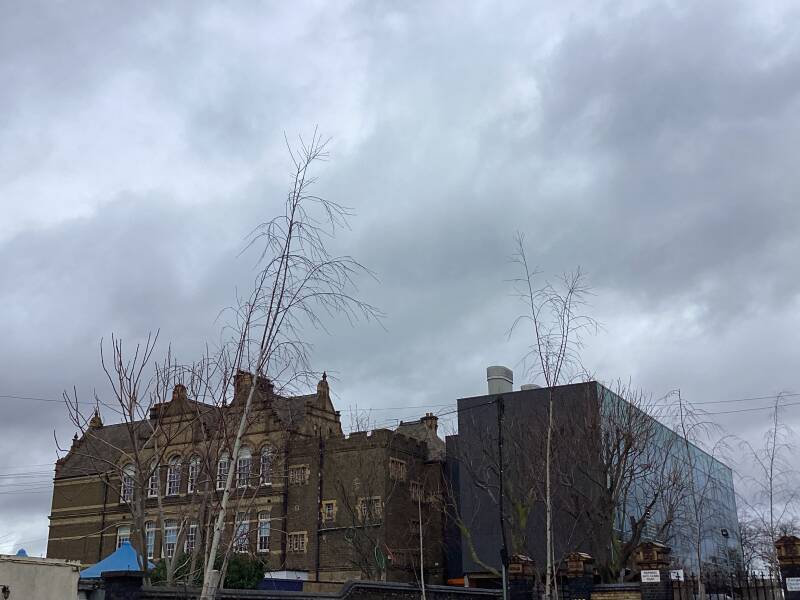
Timber framed (2009). In effect, like a giant timber classroom box raised on wooden legs. A glass curtain walls giving each classroom a high window.
Sustainable features: stack effect natural ventilation, solar reflective glass, full heat recovery and ventilation.
By Architects GRENHILL JENNER.
GREENHILL died in 2023. Hans Berger and Jo Barnett met while working at the office of Greenhill Jenner Partnership, in Brixton, London. GJP was an office dedicated to projects with a strong social dimension and were pioneers in childcare buildings and among other awards, won the prestigious RIBA Architecture Community Architecture Award, for their Patmore Centre for the NSPCC, in Batter sea.


About the building

This article explains all


The GURDWARA includes the former FRIENDS MEETING HOUSE
Former QUAKER BURIAL GROUND: original burial place of ELIZABETH FRY


Elizabeth Gurney was born in 1780 into a wealthy banking family from Norwich in Norfolk. She grew up in a privileged world but at the age of 18 was deeply moved by the words of a visiting preacher and became interested in the treatment of the poor. In 1800 she married a banker called JOSEPH FRY and moved first to London and the in 1808 to East Ham in Essex.
In 1812 Elizabeth was asked to visit Newgate Prison in London to investigate the living conditions of the women prisoners. She was shocked to discover that many children grew up in the prison alongside their mothers. She founded a school system within the prison and arranged for paid employment for the women such as making knitted stockings or patchwork.
From then until her death in 1845 Elizabeth campaigned for improved welfare for, vulnerable people, opening shelters for the homeless, forming visiting societies for sicke people and protested against slavery and capital punishment.
Elizabeth Fry regularly visited and preached at the Friends Meeting House in Barking. In 1845 she died and was buried in the North Street burial ground. More than a thousand people stood in silence during the burial.
When the burial ground was transferred to the Council this gravestone was moved to the Friends Burial Ground in Wanstead
More about the Quakers social activism


Contemporary Housing


North Street: a picturesque terrace of 14 dwellings on a small strip of land, previously thought undevelopable. The new housing was to enable local residents to downsize.
The site presented a number of challenges: overlooking, overbearing on existing residents and providing privacy for the new residents.
Consisting of two rows of dual or triple aspect cottages, all with front garden/courtyards. Main outlooks face into the courtyards, eliminating overlooking. All homes are minimum to GLA /National Space Standards, 12 are to the current equivalent to Lifetime Homes (two wheelchair accessible).
Former RED LION PH, built 1899, closed in 2008. Now residential.
Site of the HOUSE OF CORRECTION
Site of NORTHBURY HOUSE
Social Housing 1930s?


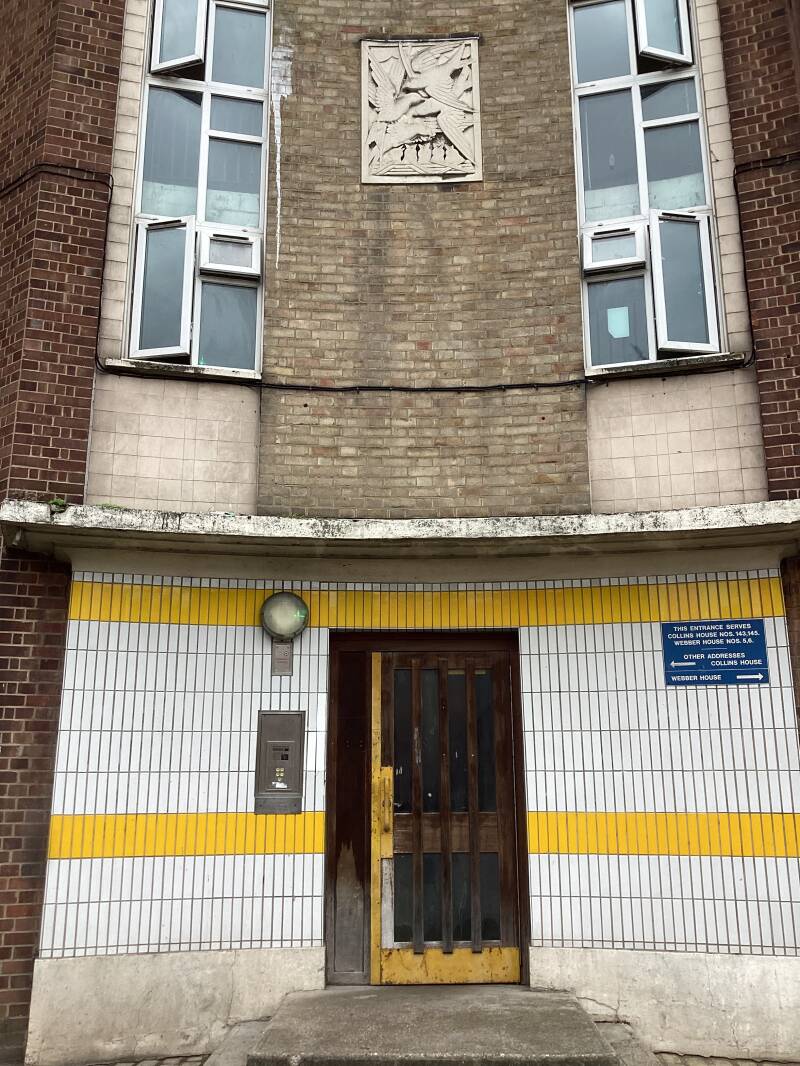

i LONDON ROAD/NORTH ST.
Site of the BARKING WORKHOUSE (undesirable housing)

Sir James Cambell (1570-1642) who was Master of the Ironmongers Company and Lord Mayor of London three times, dedicated almost fifty thousand pounds of the fortune he amassed, to bequests in his will. These included £666 13shillings and pence to found and maintain a free school, to teach reading and writing to the children of Barking. He included an annual budget for the school of twenty pounds a year. The school and a schoolmaster's house were erected in North Street, opposite the abbey ruins, after his death.

In 1722 a workhouse also opened on North Street, in response to a steep rise in the cost of providing relief for poor people in the parish. Workhouses obliged the poor to contribute to their own upkeep through productive labour. By the 1770s 50 paupers were living and working there - winding silk, picking oakum (old rope) and making mops to earn their food and lodging. By that time the nearby Free School was known as the Charter School.
In 1786 Parliament passed the Barking Workhouse Act which transferred responsibility for 'Relief' from the Parish Vestry to
"Directors of the Poor' - including the parish vicar and Justices of the Peace, who were assisted by 'Guardians of the Poor' and 'Overseers of the Poor'. They were also responsible for local charities including Cambell's Charter School and raised funds for a new workhouse, which would include new school rooms. The workhouse and school were completed in 1778. The school reopened for 20 boys and 20 girls between the ages of 7 and 11. The boys were to learn reading, writing and arithmetic; the girls reading, writing, and home spun work. Only the minimum of corporal punishment was to be permitted and the children were given dinner in the workhouse.
In 1824 the school became a 'National School' and in 1827 the boys moved to a new building in the workhouse garden, whilst the girls and infants continued to be taught in workhouse rooms.
In 1828, the workhouse had 250 inmates, making sacks and cloth, but the 1836 Poor Law transferred relief for the Barking poor to the Romford Poor Law Union. Barking's 'Poor House' was closed and converted to shops by 1841, perhaps because Romford already had a workhouse, and the growth of the fishing industry in Barking improved local job prospects. The 400 school children moved to a new building in Back Lane in 1872, which has been extended and rebuilt several times. Today it is St Margaret's Church of England Primary School. The Workhouse building was demolished in 1936 and the Asda development (opposite) dominates the site today.

On the pediment was the following inscription: "This House of Industry at the Sole Expence of the Inhabitants of Barking is to provide and protect the Industrious and to Punish the Idle and Wicked".This latin inscription was salvaged when the workhouse was demolished and is now displayed in the kitchen garden in Eastbury House.

Workhouse & School Children Mosaic by Tamara Froud
This mosaic depicts Barking's imposing workhouse of 1778 and the children who lived and worked there or attended the free school. It was created as part of the Barking Heritage Project, made possible with funding from The National Lottery Heritage Fund.
ABBEY GREEN (see more later)


To your left…

j Artwork: LONDON BRIDGE blocks
k THE LIGHTED LADY


ABBEY QUAY WESTON HOUSING

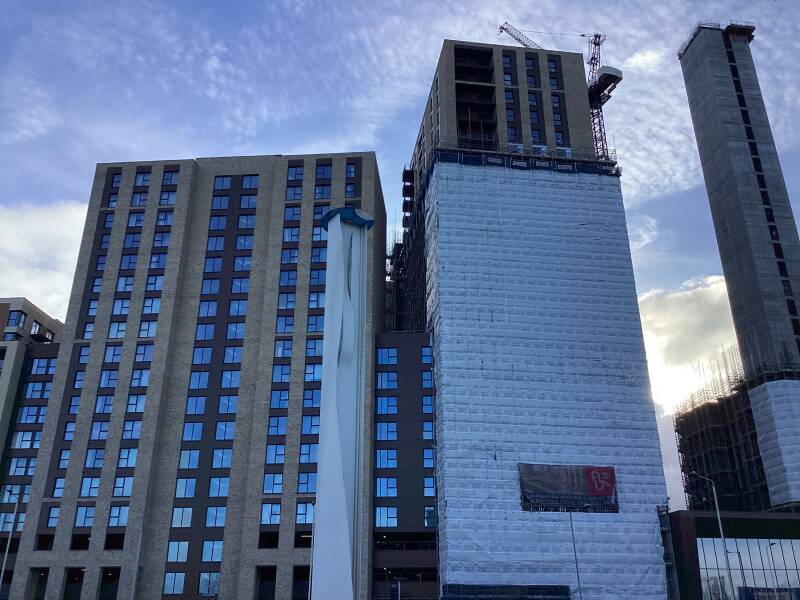
THAMES WATER OLD ? WATERWORKS

ENERGY CENTRE


LONDON ROAD BRIDGE OVER THE RIVER RODING

Essex coat of arms, 1904

EAST HAM is around the corner
RODING RIVER WALK Northwards to…

Alongside the riverside
Site of BARKING ABBEY


ST. MARGARET’S CHURCH


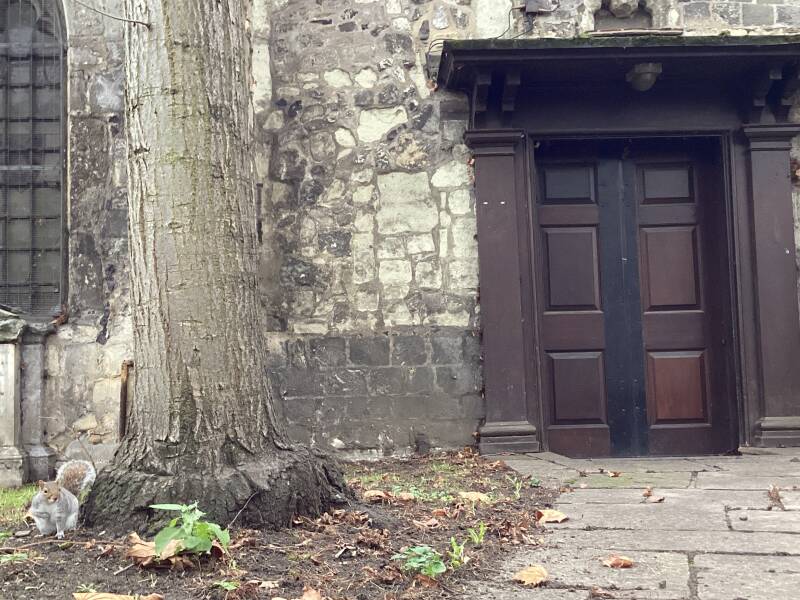
Grade I listed, built 1215 onwards, it has interesting monuments, art and stained glass.
Includes Arts and Crafts work by George Jack, and Walker Organ (1914). Captain Cook was married here. Restored in 2005 by Ronald Associates.
The church originated as chapel for local people within the grounds of Barking Abbey, to the south of the Abbey church. Its oldest part is the chancel, built early in the 13th century during the reign of King John. The building is said to have been made into a parish church in 1300 by Anne de Vere, abbess of the Abbey.
Site of BARKING ABBEY


Mapping BARKING ABBEY

Barking Abbey was founded in AD 666 by a priest named Erkenwald for his sister Ethelburga. The abbey was destroyed by Vikings in AD 871 and later re-built in the early 900s as a Benedictine nunnery under the royal patronage of King Edgar of Wessex.
As the abbey was now a royal foundation the ruler had the right to appoint a new abbess upon the death of the old one. Many of the later abbesses came from families that supported the ruling dynasty or from the royal family itself. With such grand connections Barking Abbey became wealthy.
In 1536 Henry VIII began the destruction of the religious houses of the country. By November 1539 when the last abbess Dorothy Barley surrendered the abbey to the King's representative it was the second richest abbey in the country.
In London, ALL HALLOWS CHURCH

All Hallows by the Tower is the oldest church in the City of London and was founded by the Abbey of Barking in 675AD, 300 years before the Tower of London.
ABBEY RUINS


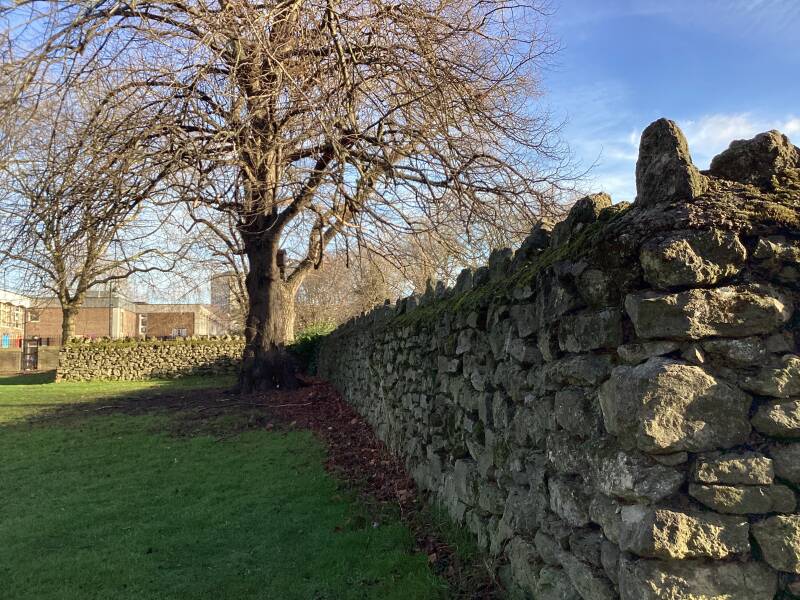


Most of the abbey buildings were immediately demolished though St Margaret's Church, the Curfew Tower and a smaller gate in North Street survived. The remaining ruins of the abbey were excavated in 1911 and the site was laid out as a park on the Abbey Road.
Barking Town had grown up close to the edges of the abbey and along the River Roding. By the 20th century the fashionable and political centre of the town had moved eastwards, away from the river and towards the area of the railway station now known as
"New Barking". Much of "Old Barking" was now full of slum housing and factories. A plan was drawn up in 1943 to create a park in Central Barking and for nearly 30 years the council bought up and demolished the old buildings. Finally in 1975 a new public open space was opened. Today this area is called Abbey Green, and has now been designated a Scheduled Ancient Monument to preserve the archaeological remains below ground.
Site of the Tudor LEET HOUSE

After the closure of Barking Abbey, as part of King Henry VIlI's dissolution of the monasteries, his daughter, Queen Elizabeth I, as Lord of the Manor of Barking, paid for the building of a Leet House in 1567/68.
It stood south-east of St Margaret's
Church, opposite the Broadway and was constructed for the townsfolk as a local courthouse ard marketplace.
Later it became known as the 'Old Town Hall. There were 22 shops and sheds for the market. The town's standard bushel - weights and measures - were also stored there.
Petty (court) Sessions were held on the upper floor, and unfortunate offenders could be held in the pillory outside, where they were humiliated by the crowd.
The Tudor Leet House was demolished in the 1920s.

Crime and Punishment in Barking Part 1: House of Correction and the Tudor Leet House by Sue Hamilton
CURFEW TOWER


The names Curfew Tower and Fire Bell Gate arose from the tolling of the bell from the tower, reminding people to extinguish all fires and lights, before the nightly curfew, which rang until the end of the Victorian period, ceasing in 1900.
THREE LAMPS, ONE POST


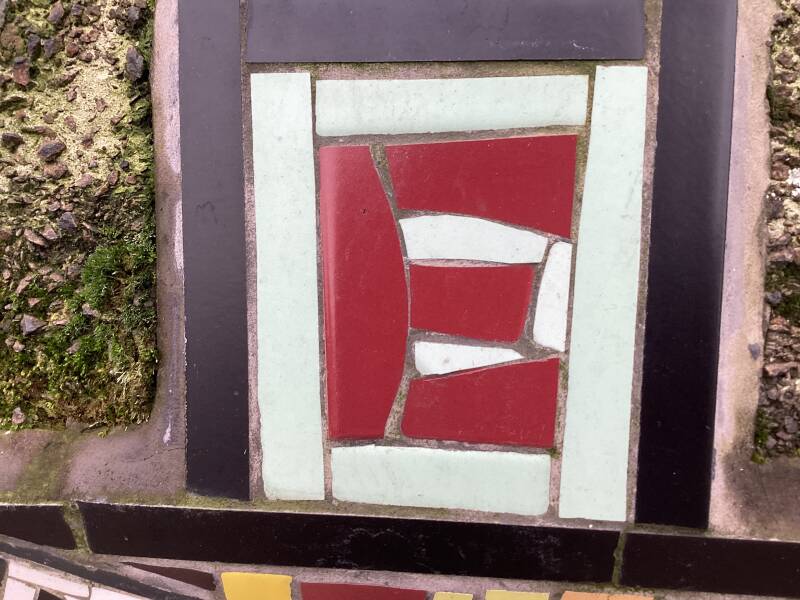


Unionism

Suffragettes
More ruins… Not the whole of OLD LONDON BRIDGE is in LAKE HAVASU


MOST PEOPLE have a vague idea that the old London Bridge was sold to the Americans in the 1960s. Except that it wasn’t. At least not all of it. The Americans built a reinforced concrete structure for the bridge and only wanted the stone as cladding which means that an awful lot of it was left in London. But where?
Two blocks from the old bridge,. Now a piece of art by JOOLS VAN SANTEN

MAKING BARKING BRILLIANT: artwork in the GREEN and in the ABBEY SPORT CENTRE
Vitreous enamel plaques, part of an art project (MBB) designed by school children and local groups.
Artist: DALE DEVEREUX BARKER
History of the Abbey and the area around

WESTON HOMES: Awesome history panel inside the MARKETING SUITE


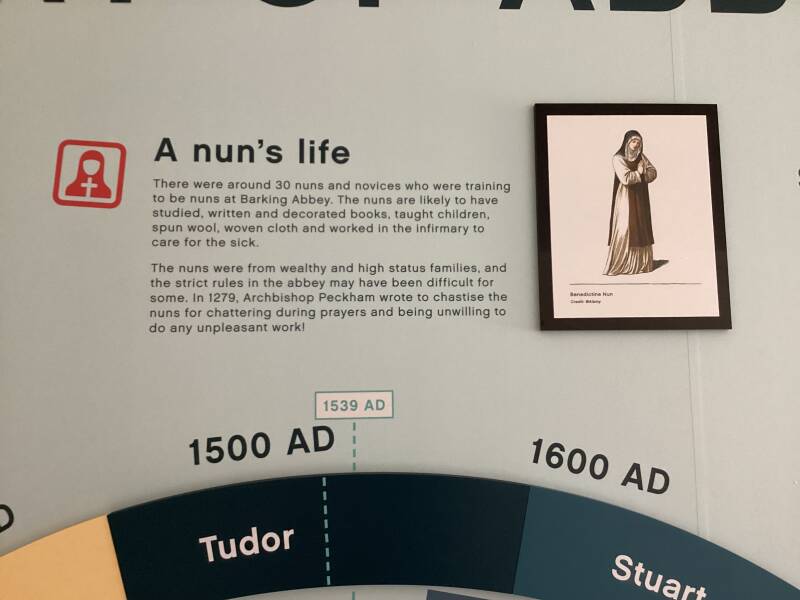

History panels on the GREEN bY the LB BARKING OF DAGENHAM


WOMEN’S MUSEUM

Women's Museum in Barking launched on International Women's Day (8 March), with its inaugural exhibition, An Idea of a Life, curated by Nephertiti Oboshie Schandorf. The show focuses on the everyday histories of the women-led communities run by the abbess and nuns who lived in nearby Barking Abbey.


This is a different, virtual museum
To RODING RIVERSIDE
RIVER RODING


The RODING rises at Molehill Green, Essex, England, then flows south through Essex and London and forms Barking Creek as it reaches the River Thames.
TOWN QUAY


1931 Ships used to load and unload at the quay but could not tie up there for any length of time. A large fishing fleet used it up to the late 19th century.Ships used to load and unload at the quay but could not tie up there for any length of time. A large fishing fleet used it up to the late 19th century.
Former GRANARY
Near the site of the Abbey’s watermill, The Old Granary at the Town Quay was built in 1870, and is all that remains of Barking Mill.
High Bridge Road
The River Roding. Ships and barges
In the mid-1600s, Oliver Cromwell's government created a mighty naval fleet. Huge amounts of oak were needed for ship-building, and timber felled in Epping Forest was transported down the River Roding, past Abbey Quay, to the naval shipyard at Woolwich.
In 1737, the river was made navigable for larger barges from Barking Mill up to Ilford Bridge. The stretch of the River Roding along Abbey Quay became much busier with barges carrying cargo between Ilford, Barking and London.
Abbey Quay was meadowland at this time with a stream running through the site. Loxford Water gives its name to Loxford Plaza and inspired a new water feature at Abbey Quay.
Fishing

Barking was once one of the largest fishing ports of England 150 years ago. It owned the largest fishing fleet called The Short Blue Fleet, which was first started in 1764 when James Whennel bought his first fishing smack.

Welcome to the Short Blue Fleet website which describes the history of the Hewett family's "Short Blue Fleet" of fishing vessels.

Victorian and 20th c. factories

By the start of the 1900s, large factories had grown up along the River Roding.
In 1921, the Abbey Match Works at Abbey Quay was the largest employer in Barking, with 530 men, women and older children working here.
In the 1980s the industry at Abbey Quay was replaced with the Abbey Retail Park.
Large private area of a trading estate and light industry, In the 19th century the area was developed for boat building along with the fish trade. A slipway was built next to Six Gates Sluice where boats were brought ashore for repair. From the late 19th it was used to tip construction and municipal waste and wharf walls were built. The area was mainly used for timber and petroleum storage. Up until the 1950s, as well as for a barge tip for municipal waste – but this ended when the A13 bridge was built. Fresh Wharf is still owned by the Hewett family who made their fortune from fishing in the 19th century
Site of a 19th iron foundry
Former MALT HOUSE & GRANARY


The restored 5-storey Victorian granary on the River Roding with contemporary bronze
clad extension, featuring low-tech approach to viable sustainability. Sustainable features include photovoltaics, natural vent and thermal mass.
Architects: Schmidt Hammer Lassen and Pollard Thomas Edwards, 2012.

THE BARKING CONTINUUM artwork


CREATIVE INDUSTRIES QUARTER (FIRST FASE)


The Roding is fully tidal up to the barrage, which was built to keep the water in the Quay at a constant level. On the left of it you can see where Hand Trough Creek joins the Roding.
Site of WHARVES & BASCULE BRIDGE,
The lifting bridge took one Barking tram route over the River Roding to Beckton, so Barking workers could get to the Gas Works there.
Boundary Rd: old tramway route
Former HOPE PH, now ALNOOR MOSQUE

Back to the GREEN
Site of BIFRONS MANOR HOUSE and, later, WHITES LEMONADE FACTORY
BROADWAY THEATRE


A 1930s building refurbished and modernised in the 2000s (TIM FOSTER architect). Double height foyer, where the original façade forms now part of the interior.
The building was previously a facility known as Barking Assembly Hall, forming part of Barking Town Hall.[1] While it is currently a live working performance venue the building is also one of four campuses for Barking & Dagemham College, hosting the college s production and performance courses

WAR MEMORIAL

Recent statue of Sergeant Job Drain VC, Field Artillery, who was born and lived in the Borough until his death in 1975. The plaque on the reverse side depicts Job Drain’s heroic action in saving the guns at Le Cateau, France 26th Aug 1914.
Sculptor: Steve Hunter, 2009.
THE VICTORIA PH


ABBEY LEISURE CENTRE


European Prize for Urban Public Space
The suburb of Barking is one of the main focuses of regeneration in the Thames Gateway project, an enormous initiative of urban transformation in which the banks of the river in East London are the main object. After years of neglect and marginal existence, its urban fabric has been subject to the pressures of major construction work while recent tensions between newcomers and the existing population have affected its social fabric.
LONDON BOROUGH OF BARKING AND DAGENHAM TOWN HALL


Designed in the 1930s but not built until the 1950s. The lower part of the building retains a strong ‘30s influence. A regular arrangement of windows in the Georgian style. Imposing clock tower has unexpectedly Baroque tendencies. Architect: Herbert Jackson & Reginald Edmonds,
Population of the Borough

2021 Census
MODERN FOLLY


The recreation of an imaginary lost past of BARKING.
Students from the THEATRE SCHOOL, elders from the AFRO- CARIBBEAN LUNCH CLUB and apprentice bricklayers from the local COLLEGE were involved.
Project by MUF Architecture/Art
BARKING LEARNING CENTRE & LIBRARY


Architectural practice

BARKING CENTRE

The centre hosts a library, a cafe, an art gallery, a sauna and spa, and offers a range of courses and qualifications. And a library of things!.

ARBORETUM


MEMORIAL TO VICTIMS OF ASBESTOS


Barking and Dagenham have seen an exceptionally high asbestos mortality rate, a marker of how hard the area has been hit by the legacy of the Cape Asbestos Factory, which operated in Barking from 1913 to 1968. Health and Safety Executive figures show that Barking and Dagenham is the worst borough in the country for the number of women dying from mesothelioma. So common was the harsh cough, that sounds somewhat like a dog barking, that the phrase “Barking cough” was widely used to describe the symptoms of asbestosis among the population of and around the former Cape Asbestos Company factory on Harts Lane.
EAST STREET
Former TOWN HALL and MAGISTRATES COURT

Built in 1893 as Barking Town Hall and Library. From the 1950’s to 2012 the building was a magistrates court.
Proposals have been put forward for the ground floor to be converted to shops and restaurants and the upper floor to residential. Original
Architect: Charles James Dawson?. He was a prominent builder.Proposed conversion Architect: AWW.
SHORT BLUE PLACE


Remember fishing?

Barking was once one of the largest fishing ports of England 150 years ago. It owned the largest fishing fleet called The Short Blue Fleet, which was first started in 1764 when James Whennel bought his first fishing smack.
FAWLEY HOUSE
Fawley House was built on the site of a smaller house in East Street by Fishing
fleet owner Samuel Hewett (1797-1881).
He sold it to Captain James Morgan – who had risen from a lowly fisher boy to
become a wealthy Fishing Smack owner. It was a double fronted house with a large
stone bay windows and a porch entrance.
Also with a spacious ornamental conservatory, stables, and an excellent garden – for some years this included the figurehead of Captain Morgan’s first
vessel. The ground floor was converted to shops in the 1890s by Thomas Pelling.

EAST STREET HISTORIC ESTABLISHMENTS
Former BURTON’S building
See the Elephants
Burton arrived in Britain, in 1900, as Meshe David Osinsky, 15 years of age. The Jewish teenager had fled the Russian pogroms (from Kovno, in modern Lithuania). He probably started out as a ‘peddler’ of garments, before he opened his first outfitter’s shop in Chesterfield in 1904, under his new name, Maurice (later Montague) Burton.
THE BULL INN, 1925

This pub was present by 1580 and was rebuilt in 1885 and most recently in 1925. * The Bull closed in 2014, and now is DE ROYA RESTAURANT.
Former CO-OP
See the beehive
Follow SHORT BLUE PLACE to…
TECHNICAL SKILLS ACADEMY

METHODIST CHURCH

MAKE IT

BAPTIST TABERNACLE


1893
Former BREWERY TAP (PH), now DE LOUNGE


Afro-Caribbean

Built in 1894, across the road from its predecessor, this pub was previously the tap for Glenny's brewery, which was bought by Taylor Walker in the 1930s.
h BARKING ENTERPRISE CENTRE
CATHOLIC CHURCH
g WILLIAM ST. QUARTER
A redevelopment of the old LINTON ESTATE
ANNE MEWS
Terraced houses, duplexes, flats. In 2007, the first Council social housing for decades.
Archtects: AHMM and MACCREANOR LAVINGTON
OCULUS HOUSE
BUSINESS CENTRE
HOUSE OF ARTISTS


HAPAG-LLOYD HQ

STATION PARADE, EAST STREET, and around: Shopping in Barking

Barking Market which re-opened in 1991, following an Act of Parliament, is part of an ancient tradition of markets, at various sites, in the town centre.
The rights for a market in Barking were first mentioned in a charter of King Henry Il and the earliest records of the market are from
1175-79. The original market was owned by Barking Abbey until the dissolution of the monasteries by King Henry VIII, when it passed to the crown. In 1567/68 Queen Elizabeth I, as Lord of the Manor of Barking, paid for the building of a market house, which was also known as The Leet House, close to the abbey ruins.
In 1616 the ownership of the market, market house and other buildings was conveyed to Samuel and John Jones, who settled them in trust for the parish. Some market rights were retained by the crown and included with the Manor of Barking, when granted by King Charles I, to Sir Thomas Fanshaw, in 1628. The Elizabethan market house and 24 shops were given to the churchwardens and others, in trust for the poor of the parish in 1661.
By 1850 the Market Hall was used as the Town Hall and later demolished. The income from the exterior market stalls gradually decreased and Barking Market ceased to exist when abolished by the government in 1875. St Ethelburga's Fair, celebrated since medieval times, also ended that year.
The marketplace had once been the nucleus of the town, but with the coming of the railway, trading had moved toward the station.
Blake's Market was a covered market with entrances on East Street, beside the old swimming baths, and via the alley on Ripple Road.
This opened in 1922 but was destroyed by fire in 1971 and was replaced with The Arcade.
From 1931 there was a Broadway Market, which ran behind the shops on the south side of East Street and operated until the mid-sixties. Shoppers recall the dangling rabbits, horsemeat, and live eels; a record stall, Arthy's Bakers and seasonal fruit and vegetables.
Barking Town Centre Market can now be found in East Street and surrounding streets. It is a thriving market of over 100 trading positions, managed by the local authority. As well as a strong history in market trade, the borough's future is bright with the City of London's wholesale markets coming to the borough too.

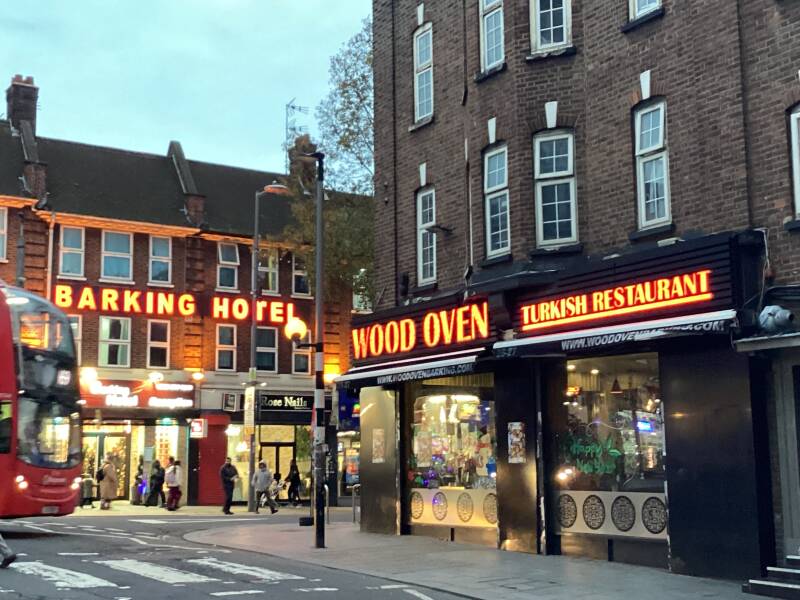


Barking and Dagenham is one of the London boroughs with a large Romanian community:
Ripple Road
Shops and eateries
CONSTELLATIONS

Six moulded concrete, LED and stainless steel lightsculptures appearing throughout the EastLondon Transit bus route.
A collaboration between TfL, Burns and Nice UrbanDesigners. Artist: Tony Stallard, 2009.
Victorian houses, now shops

CENTRAL CLINIC. Former INFANT AND CHILD WELFARE CENTRE

Former ST.MARGARET’S VICARAGE, now COSCO HOUSE


The Vicarage was built on Vicarage Drive,
off Ripple Road, in 1794, for the Vicar of
Barking, Peter Rushleigh. Local historian
Lockwood recalled that,
‘the carriage drive
was lined with lilacs.’ It is now a Grade II
listed building and gives its name to
Vicarage Fields – once the home for Barking
FC – which became a shopping centre in the
1990s and redeveloped again in the 2020s.
St Margaret’s Vicarage was previously in
North Street, in or close to Fulke’s Manor
and the current vicarage is in Upney.
Suburbial street. RIPPLE ACTIVITIES CENTRE
