ROMFORD. LONDON BOROUGH OF HAVERING.
Welcome to the ROYAL LIBERTY OF HAVERING
How to get here?


Romford had humble beginnings, as a small hamlet, in the ESSEX countryside, 14 miles NW of London. But transport links are important and Romford happens to be close to the road the Romans built between their capital, COLCHESTER, and London.
And, for hundreds of years, ROMFORD became a market town.

More about ROMFORD’s history
Look for the landmarks that follow. You are following a route published by the LONDON BOROUGH OF HAVERING (DISCOVER HAVERING)
Alternatively you can follow JANE’S LONDON, an awesome blog!
ROMFORD STATION
With the arrival of the railways ROMFORD grew enormously. First, a freight line, then, from the 20th June 1839, a passenger service reached ROMFORD.
- In the 1930s there was an air service between Romford and Paris.
SOUTH STREET
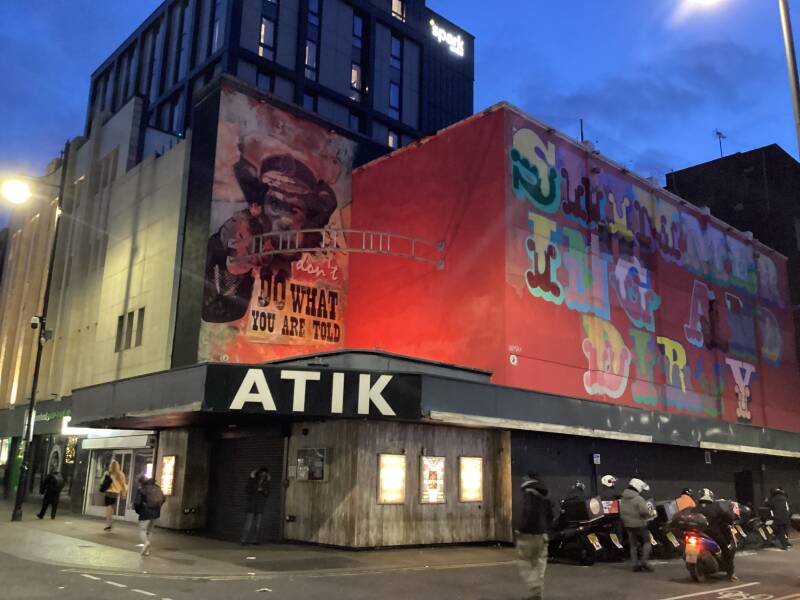
Odeon?. Is this Greek?

Former POST OFFICE


Site of ABC CINEMA


AN IMPORTANT JUNCTION
The meeting place of the London to Colchester road and the N-S route from HAVERING PALACE to HORNCHURCH and the THAMES
SITE OF THE COURTHOUSE AND THE GAOL
SE córner
THE GOLDEN LION PH


This is one of the only two surviving coaching inns in Greater London. The current building is a result of additions from the 17th-19th c. (the current frontage dates from Victorian times)but since the 1440s an inn has stood here.
It was used, early in the 17th c., as a receiving office for MAIL on its way to other Essex towns and villages.
The other one…
THE GEORGE INN, SOUTHWARK
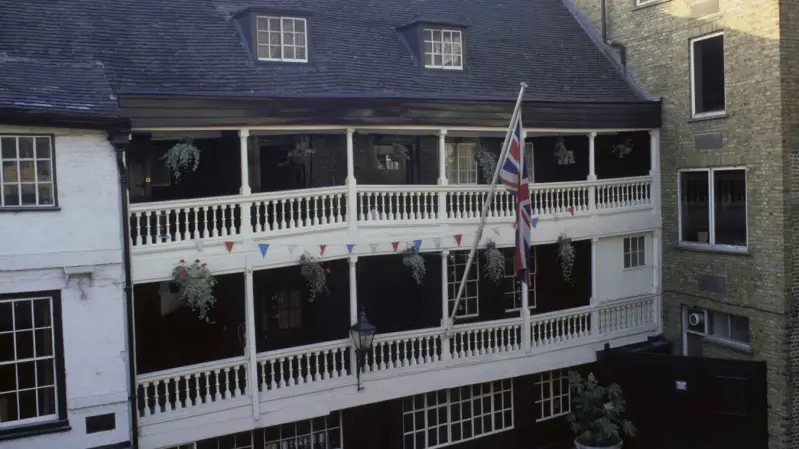
More about the performances of plays in INN YARDS
LANDLORD FRANCIS BACON!
The lawyer, statesman, philosopher inherited it from his father
DICK TURPIN
The infamous DICK TURPIN used to frequent the inn
Not DICK TURPIN, but STEPHEN BUNCE

The comic actor William Kemp stayed at Romford (here?) during his morris dance from London Norwich in 1599. Was he SHAKESPEARE’s favourite clown?
The poet WILFRED OWEN, when stationed at ROYAL LIBERTY SCHOOL, during WWI
MARKETPLACE

“Go to ROMFORD to be new bottomed” is an Essex proverb used to encouraged people to visit the market here, a market renowned by its leather breaches. This was an early centre of leather trade.
Henry III, under the ROYAL CHARTER OF THE LIBERTY OF HAVERING, granted Romford the privilege of holding a market in 1247. And no other market was permitted to set within a day’s sheep drive (approximately 6 miles)
Thomas Blood, who in 1671 almost succeeded in stealing the Crown Jewels, lived in an apothecary’s shop in Market Place
Shopping, eating and drinking
You are following A ROMAN ROAD
The southern Celtic tribes were cooperative with the Romans, although inter-tribal warfare continued. In AD 43 this gave the Roman Emperor Claudius the excuse to carry out an invasion proper. This area was heavily involved at the time with Roman Germanic mercenaries pursuing the Celts from the Battle at the Medway across the Thames here while the main army with their war elephants had to cross further upstream and then fought back across this area to triumph at Britain’s capital at Camulodunum (Colchester).
The Trinovantes were rewarded with local selfgovernment. A road was constructed (on the line of the A12) providing the strategic axis for the Romans to dominate the area; a Roman Staging Post was built at Durolitum (see a little further in this walk) and another possibly at Coldharbour near Rainham. Farmsteads or villas were built across the district for the valuable wheat production.
ST.EDWARD THE CONFESSOR, Church of England

CHURCH HOUSE

TOLLGATE HOUSE

A building finally completed after years of protracted redevelopment of the area. The TOLLGATE was in fact somewhere else…
ST.EDWARD’S WAY: PART OF THE RING ROAD
Consisting of up to 5 roundabouts, it was constructed in 1969.
TOWN HALL
WAR MEMORIAL

The Romford war memorial is situated in the Memorial Gardens at the rear of the Town Hall, Romford. It was originally erected in Laurie Square but was moved to Coronation Gardens in about 1969 when the square was swept away with the construction of the ring-road. It takes the form of of a Portland stone croos mounted on a Portland stone plinth and base. The plinth bears the inscription. Around the base of the plinth are inscribed the names of those who gave their lives; these have still to be transcribed. The orginal memorial was unveiled on 18th September 1921 by Lord Lambourne; the architect was Mr J W Hammond. The the Second World War names were added to the memorial on 10 November 1996. A stone placed in front of the memorial records the addition the names of the civilians who died during the Second World War. The memorial lists the names of the 360 who died in the First World War, and the 255 and 141 civilians who died in the Second World War. These names are also recorded on panels at the Romford War Memorial Old Folks Club, 21a Eastern Road, Romford. The names listed here are sorted, wherever possible, into alphabetical order within conflict for ease of reading and research.
Buses along MAIN ROAD to RAPHAEL PARK and GIDEA PARK CONSERVATION AREA
PUBLIC LIBRARY
ST.EDWARD THE CONFESSOR, again, now a CATHOLIC CHURCH
NORTH STREET, formerly WOOLFORD STREET
Tiles: RIVER ROM PATH
From here, see THE AVENUE: Probable SITE OF THE ROMAN MILITARY STATION OF DUROLITUM

According to archaeological evidence and to the ANTONINE ITINERARY, a 2nd c.A.D document. The itinerary of the Emperor Antoninus, or the “Itinerarium Provinciarum Antoni(ni) Augusti”, to give its full Latin title, is a collection of 225 lists of stopping places along various Roman roads across the Roman Empire. The British routes are at the end of the land itinerary.
BUS STATION

More about London bus types
Designed with an style that reflected the post war UNDERGROUND stations, it opened in 1953 to cope with expansion of bus services around Romford that the nearby Hornchurch garage could not cope with, serving the growing new housing estates. It can hold up to 115 buses at any one time.
North Street was initially allocated RTL, STL, TD and SRT types. RTs soon became the standard double deck type and RFs replaced the TDs in 1959. RMs were added in 1966, and OMO was widely introduced from 1971 with SMSs and then DMSs. Between 1975 and 1976 North Street uniquely operated the 13 RMAs on route 175. The late seventies saw Romford involved in the experimental Multi-Ride ticket scheme and was the first garage to receive an allocation of Ts.
Retrace your steps and turn right into Brocklands Lane
The Romans crossed the ROM RIVER over this point on their way to COLCHESTER
Marshalls Road
VICTORIAN TERRACES,
COTTONS PARK
ROMFORD STADIUM
ST.ANDREW’S CHURCH
Como St, Linden Street
EDWARDIAN TERRACES
Under the RING ROAD, ANGEL LANE
TRINITY METHODIST CHURCH


SKOL, a beer by IND COOPER

Here you have a redacted part of the LINDON SHOES original
For over 200 hundred years, Romford’s main industry and biggest employer, providing the catalyst for the development and expansion of the town.
It was founded in 1708 by one Benjamin Wilson. It originated as an extension to the already long standing STAR INN that was situated in the HIGH ST., the main road out of London, that lead onwards towards Chelmsford, Colchester and eventually on to Norwich in the east.
In 1799 the brewery was bought up by a reputable brewer by the name of EDWARD IND.
With the opening of a mainline railway network at Romford in 1839 – travel and transportation of freight and people to and from the brewery, became much easier to manage, and allowed the business to expand rapidly. In fact, the brewery was so big that it even had its very own bespoke railway sidings connected to the main-line Romford Station.
In 1845 renowned London brewers Octavius & George Coope bought in to the business – and as a result, the brand name of ‘Ind Coope’ was born. By the early1900’s the Romford Brewery employed over 450 people.
Fast forward several decades to the late 1960’s-early 1970’s the brewery employed over 1,000 workers and the site covered 20 acres.
One of the Romford Brewery’s most popular beers was ‘John Bull-Bitter’, named after the historic English farmer character – and his distinctive caricature logo displayed on the product.
It’s probably fair to say that the Romford Brewery’s ‘John Bull Bitter’ didn’t always go down too well with the majority of the CAMRA enthusiasts – as it was often described as being too watery, and full of suds – and as a result, the popularity of the product started to fade, which in turn had an adverse impact on the Romford Brewery’s business.
Sadly, in 1993 the long standing Romford Brewery closed and was subsequently shut- down for good – causing an adverse economic and employment impact to the area.

Carry on reading the original article by LONDON SHOES
THE HAVERING MUSEUM

Back to SOUTH STREET
In 1949 Romford Football Club reached the first Amateur Cup Final